

The Origins and Evolution of Strategic Investment Advisors
Intellectual Foundations and Strategic Research
In 1980, Professor José Carlos Jarillo embarked on an extensive academic career dedicated to understanding the drivers of long-term corporate profitability. His research sought to answer a fundamental question: why do certain enterprises systematically outperform their peers? While individual success often involves idiosyncratic factors, Professor Jarillo aimed to identify generalizable strategic principles that could predict, a priori, whether a specific corporate strategy would yield sustainable competitive advantages and superior financial returns.

Transition to Investment Management
The synthesis of this research led to several seminal publications and years of strategic consultancy for global corporations. These insights eventually formed the cornerstone of a proprietary investment methodology. The hypothesis was clear: if the long-term profitability of a business can be accurately forecasted through strategic analysis, the implications for capital allocation are profound: buy good businesses when the market, for whatever reason is offering their shares at a discounted price.
Consequently, Strategic Investment Advisors (SIA) was established in early 2002. The firm commenced operations with €5 million in assets under management, sourced from a close network of associates and family.
Growth and Market Navigation
The firm’s inception coincided with the aftermath of the “Dotcom” bubble. This market environment provided a unique opportunity for a traditionnal value strategy. SIA’s initial performance was exceptional; notably, the SIA LTIF Classic outperformed its benchmark by over 20 percentage points for several consecutive years, facilitating a significant inflow of institutional and private capital.
During this period of expansion, the firm strengthened its leadership. Mr. Walter Scherk, a distinguished financier, joined as a Full Partner, followed by Mr. Alex Rauchenstein, who assumed the role of Business Manager. To support its growing scale, SIA expanded its research team, including the arrival of Mr. Marcos Hernandez Aguado from Merrill Lynch in 2008, developing specialized expertise across diverse sectors, including natural resources, maritime shipping, aquaculture, and industrial construction supplies.

The GFC as an inflection point
The 2008/09 global financial crisis represented a pivotal moment for the firm. As broader market sentiment shifted away from public equities—our core area of expertise—SIA underwent a strategic consolidation.
Following the GFC, SIA entered a period of deep analysis and self-assessment, with relevant structural changes. During this time, the management team of the funds changed with the incorporation of Mr. Marcos Hernández Aguado as co-manager of the funds alongside Prof. Jarillo.
SIA finally decided to adopt a boutique-style investment structure, with a smaller size, fewer offices and employees across all areas; that is, a less institutional setup, with the aim of focusing all resources on asset management and performance. As a result, the number of funds was gradually reduced to the two current ones: SIA LTIF Classic (Global, Strategic Value) and SIA LTIF Natural Resources (Strategic Value applied to Natural Resources).
SIA’s headquarters moved to Lachen, and the new management team implemented a refined investment strategy, which has been under development ever since, with a dual objective: greater capital protection and a net return above 10%.
By leveraging our accumulated intellectual capital and maintaining a low-turnover philosophy, we successfully navigated these shifts with a leaner, highly focused analytical team.
Our investment philosphy evolves to Strategic Value
Accordingly, significant changes were implemented in SIA’s investment philosophy and strategy, summarized as follows:
- A search for higher quality investments, which we call Strategic Value as opposed to Traditional Value.
- A new investment criterion based on the 4Gs: good business, good management, good balance sheet, and good price.
- Portfolio construction based on the RAS, or “Risk-Adjusted Strategy,” which structures the portfolio according to risk categories, with the objective of greater risk management.
- A more disciplined approach to Concentration & Diversification (C&D) is also adopted, maintaining a portfolio of 30–35 companies while ensuring that no single factor dominates the portfolio.
- Increased transparency through the publication of more frequent newsletters and presentations, as well as the IRR and NAV of the funds, including short- and medium-term guidance.
- The implementation of a sector matrix and a watch list as an entry barrier to the funds.
Despite these changes, the basics remained unchanged: we maintain a portfolio of rigorously researched companies, held with high conviction, ensuring that our strategic analysis continues to drive long-term value for our clients.


The new SIA: ready for compounding
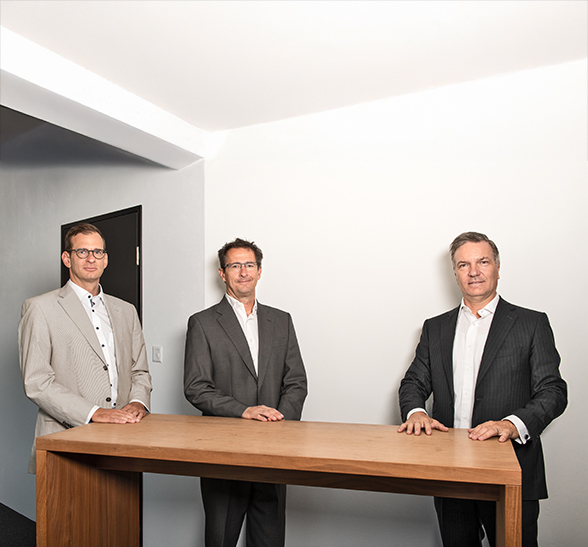
In 2019, the last major change took place with the MBO of SIA, which came into the hands of the three key employees. Prof. Jarillo decided to step aside, and Mr. Hernández Aguado took the reins of the funds, supported by the Investment Committee, composed of Mr. Alex Rauchenstein, Mr. Urs Marti, and Prof. Jarillo, who contribute their extensive experience and knowledge of the investment world.
In terms of performance, the SIA LTIF Classic has delivered 12% per annum since 2019, a period that includes the COVID crisis in 2020. We are convinced that this 12% is an achievable long-term objective, as the current SIA team—after several decades and economic cycles under its belt—believes it has found a balanced way to manage risk and return: preparing the portfolio to navigate economic crises, preserving capital through very disciplined risk management, and seeking a reasonable return, which we estimate at 10–12% net per year, that is, doubling capital every 6–7 years.


